April 23, 2026 • 8 min read
Best Travel Planning Apps in 2026: Plan Smarter Trips with AI & Smart Guides
Gamana Editorial Team
Travel Innovation
Let's Be Honest, Trip Planning Is Still Kind of a Mess
You would think by now, with all the technology we have, planning a trip would be the easy part.
It is not.
Most people still end up with 47 open browser tabs, three different spreadsheets, a notes app full of random recommendations, and a Google Doc itinerary they stopped updating two days before the trip. Sound familiar?
The promise of travel planning apps has always been "we will make this easier." And honestly, most of them do help, just not in the ways that actually matter when you are standing in front of a 2,000-year-old monument with no idea what you are looking at.
That is the gap that the best trip planning apps in 2026 are finally starting to fill. Not just booking tools. Not just maps. But apps that actually make you feel something when you travel.
What Nobody Tells You About Most Travel Apps
Here is the thing about most travel organizer apps out there: they are great at logistics and terrible at experience.
They will tell you a place opens at 9 AM. They will not tell you why it matters.
A few real problems travellers still face even with apps:
- Recommendations feel copy-pasted. Every app suggests the same top 10 spots everyone already knows about.
- You go offline and the whole thing falls apart. No data, no guide. Not ideal when you are in rural Tuscany or a basement museum.
- Context is completely missing. You read a monument's name on a plaque and walk away having learned nothing.
- Hiring a local guide for every single city gets expensive fast.
- Planning tools and on-ground experience tools are always separate apps, never integrated.
A genuinely good offline travel guide paired with smart AI does not just solve one of these. It solves all of them at once.
What Actually Makes a Travel App Worth Keeping in 2026
Not every app deserves your phone storage. Here is what separates the ones worth using from the ones you delete after one trip.
It has to work without internet
This is the baseline. Any app calling itself an offline travel guide needs to actually function offline, downloaded narrations, maps, content, all of it. Not just partially.
It should know what you care about
A good AI travel planning app does not treat a food lover and an architecture nerd the same way. Personalisation should feel real, not like a filter you set once and forget.
The storytelling needs to be genuinely good
Facts are free. Context is rare. The best digital travel assistant apps understand that travellers want to feel connected to a place, not just informed about it.
It should work hands-free
Looking down at your phone while you are supposed to be experiencing a place defeats the whole point. Audio-first design matters more than people realise until they try it.
It should give you value over time
Rewards, discounts, bundled passes. If you are a frequent traveller, an app that gives something back is worth far more than one that just charges per tour.

The Apps Actually Worth Your Attention This Year
Gamana
This one is worth starting with because it takes a genuinely different approach to what a travel planning apps experience should be.
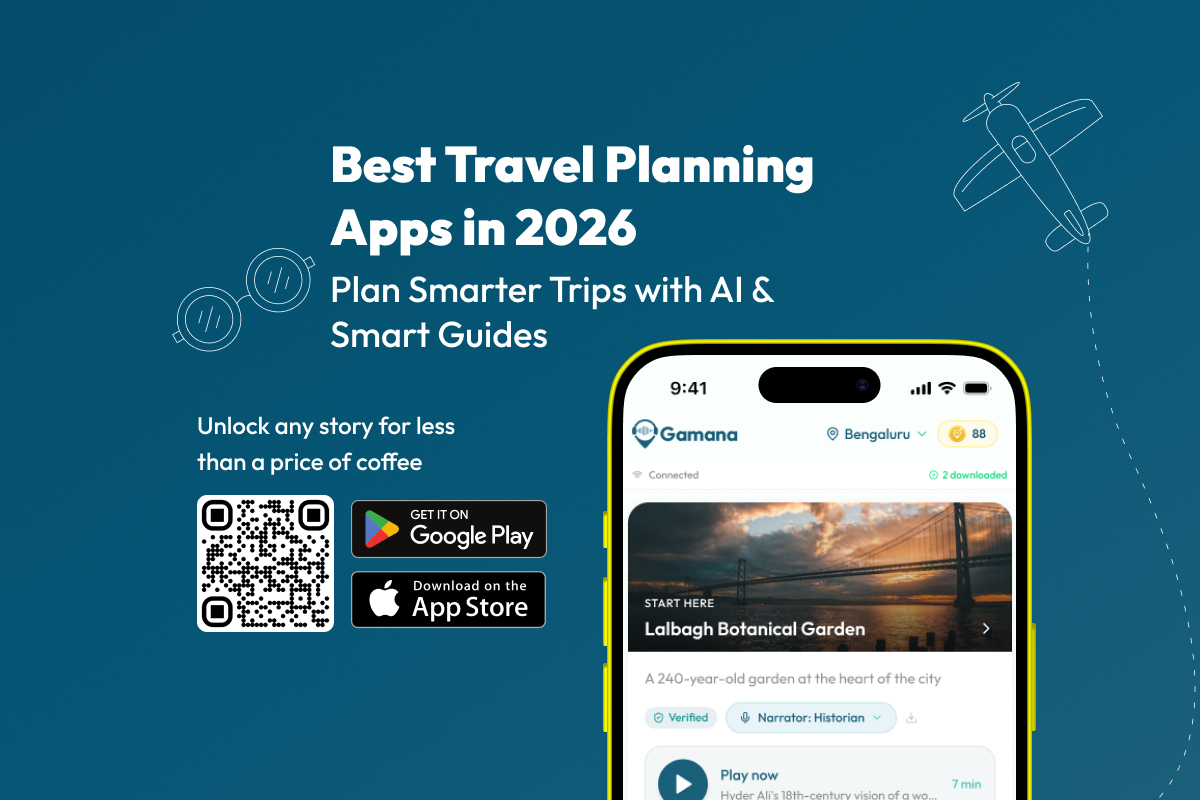
Gamana is built around audio storytelling and AI personalisation, which sounds like a marketing phrase until you actually use it. The idea is simple: instead of reading about a place, you listen to it being brought to life by a narrator who has a distinct voice, personality, and expertise.
You pick your guide. Lewis is a sharp, analytic British historian. Bella is warm and human-centred, American in tone. Arjun approaches history through systems and patterns. Aarti brings deep Indic historical knowledge. Neerja is funny, punchy, and keeps things moving. These are not just voice options. They genuinely change how the same place feels.
What makes Gamana stand out specifically:
- Download narrations before your trip and they play completely offline. No data needed, which is a real lifesaver in places with unreliable connectivity.
- The AI personalisation adjusts what you hear based on your interests over time, not just a one-time preference setting.
- You can create and share your own tour storylists, so if you find an incredible walking route through a city, you can share it with others.
- Gamana Coins reward you as you explore, with a blockchain-based system that actually gives you something back.
- Partner discounts and exclusive offers are built in, not stuck behind a separate membership wall.
- Content is available in local languages, which adds a layer of authenticity that translated-English guides often lose.
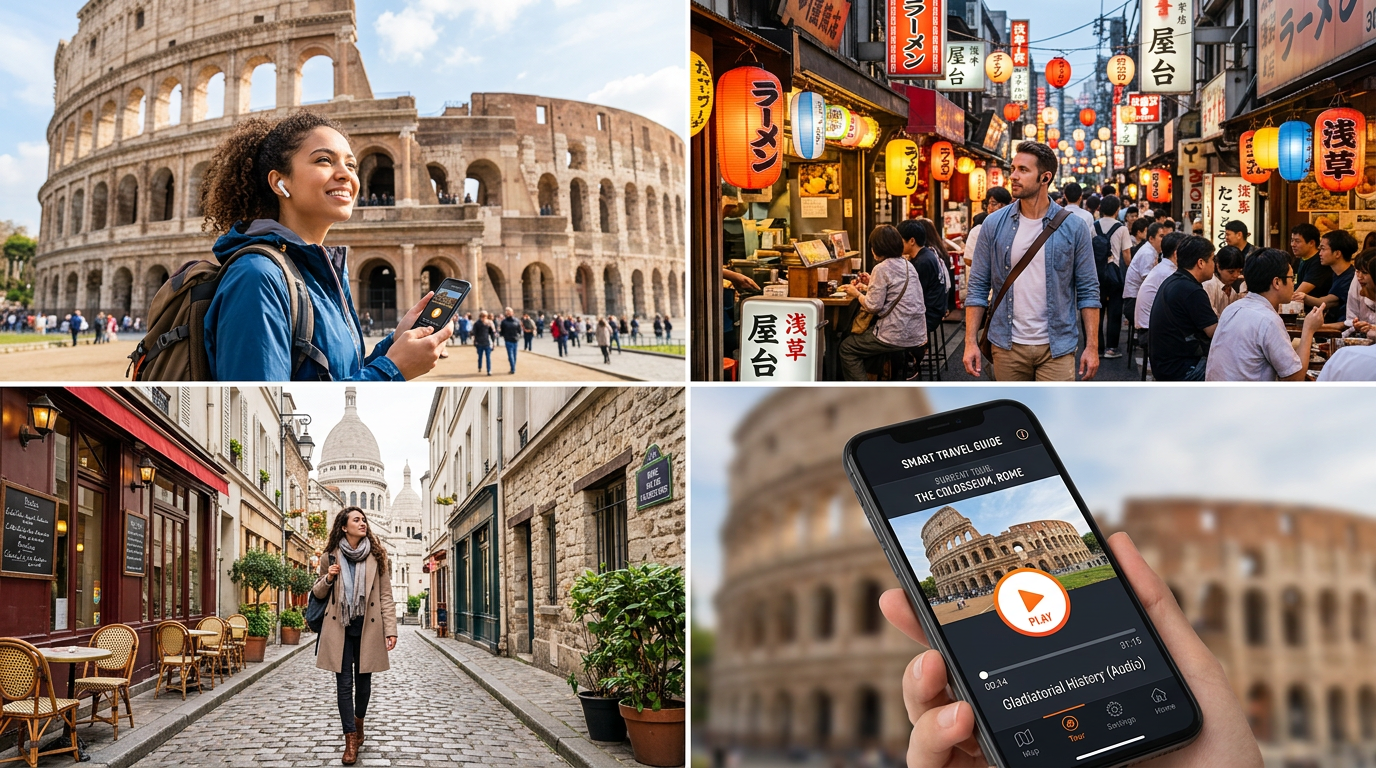
Current tours include Ancient Rome, Hidden Montmartre in Paris, and a Tokyo Street Food Journey that is completely free to start. More cities are being added regularly.
Available on iOS and Android.
Google Maps
Still the backbone of getting around anywhere. The AI search improvements in 2026 have made it smarter for real-time recommendations and crowd data. But it is a navigation tool, not a storytelling one. Use it alongside something like Gamana, not instead of it.
TripIt
A solid itinerary planning app for pulling all your bookings, flights, and hotel confirmations into one clean view. If you are the type who needs everything organised before you leave, TripIt does that well. It just will not tell you anything meaningful once you arrive.
Roadtrippers
Made specifically for road trips. Great for mapping out a route with logical stops, fuel points, and hidden gems along the way. If you are doing a long drive through multiple regions, this one earns its place.
Izi.Travel
Community-made audio guides for a wide range of cities. Free for a lot of content, which is genuinely useful. The gap is that the quality varies a lot and there is no real AI personalisation. What someone else found interesting may not match what you care about at all.
The Real Shift: From Planning Trips to Actually Experiencing Them
There is a difference between a trip that was well-planned and a trip that was actually felt.
Most itinerary planning apps nail the first one. You have your schedule, your bookings, your routes. Everything is ticked off. But you come home and the highlights you remember are not the planned ones. They are the moments when something surprised you, when a place had more to it than you expected.
That is what a genuinely good digital travel assistant should create more of. Not tighter schedules, more moments where you actually connect with where you are.
The best AI travel planning apps in 2026 understand this distinction. They are not trying to replace the experience of travel. They are trying to deepen it.
Gamana's whole design philosophy is hands-free, eyes-up exploration. You press play and walk. The story comes to you. Your attention stays on the place, not the screen.
That shift, from reading about something to being told its story while you stand in front of it, is genuinely different in practice.
Matching the Right App to How You Actually Travel
There is no single best app for everyone. It depends on how you travel.
If you are a slow traveller who goes deep into one place
Prioritise storytelling and context. Gamana is built for exactly this. You want to understand a place, not just check it off.
If you are someone who plans every detail in advance
Use TripIt or a good itinerary planning app to structure everything, then layer Gamana for the on-ground experience once you arrive.
If connectivity is often unreliable on your trips
Offline access is your first filter. Make sure narrations and maps are downloadable before you leave the hotel. Gamana handles this well.
If you travel with people who have very different interests
Pick apps that personalise by interest, not just location. Different narrator personas mean two people can visit the same site and get a completely different, equally valid experience.
If you are watching your travel budget
Look hard at what free tiers actually include and whether rewards accumulate into real value. Gamana's free tours and Coins system are worth exploring before committing to any paid plan.
A Few Things Worth Doing Before Every Trip
These are simple but genuinely make a difference:
- Download everything offline the night before. Narrations, maps, saved places. Do it on Wi-Fi and thank yourself later.
- Group your day by geography, not just interest. Visiting things that are near each other back to back saves more energy than you expect.
- Pick a narrator or guide persona based on what that specific destination deserves. A funny, punchy narrator works beautifully for a street food tour. A historian adds real weight to a heritage site.
- Check for bundles before buying individual tours. Multi-city passes almost always work out significantly cheaper.
- Leave actual space in your itinerary for nothing. The best travel moments are usually unplanned.
Where Does This Leave You?
If you are planning a trip in 2026 and still relying on a combination of old blog posts, pinned Instagram saves, and a rough Google Doc, it is worth trying something built for how travel actually works now.
The travel planning apps that matter this year are not the ones with the most features. They are the ones that make you more present in the places you visit, not more glued to your screen.
Gamana gets that balance right in a way that most travel apps still do not. It is worth downloading before your next trip, even just to try the free Tokyo tour and see how different audio-first exploration actually feels.
The best offline travel guide is not a PDF you downloaded. It is one that listens to what you care about and talks back with something worth hearing.
Ready to plan smarter and explore deeper?
Download the Gamana app and start your first audio tour for free.