April 30, 2026 • 7 min read
Varanasi Walking Tour Guide: Explore Ghats & Ganga Aarti with an AI Audio Experience
Gamana Editorial Team
Heritage & Culture
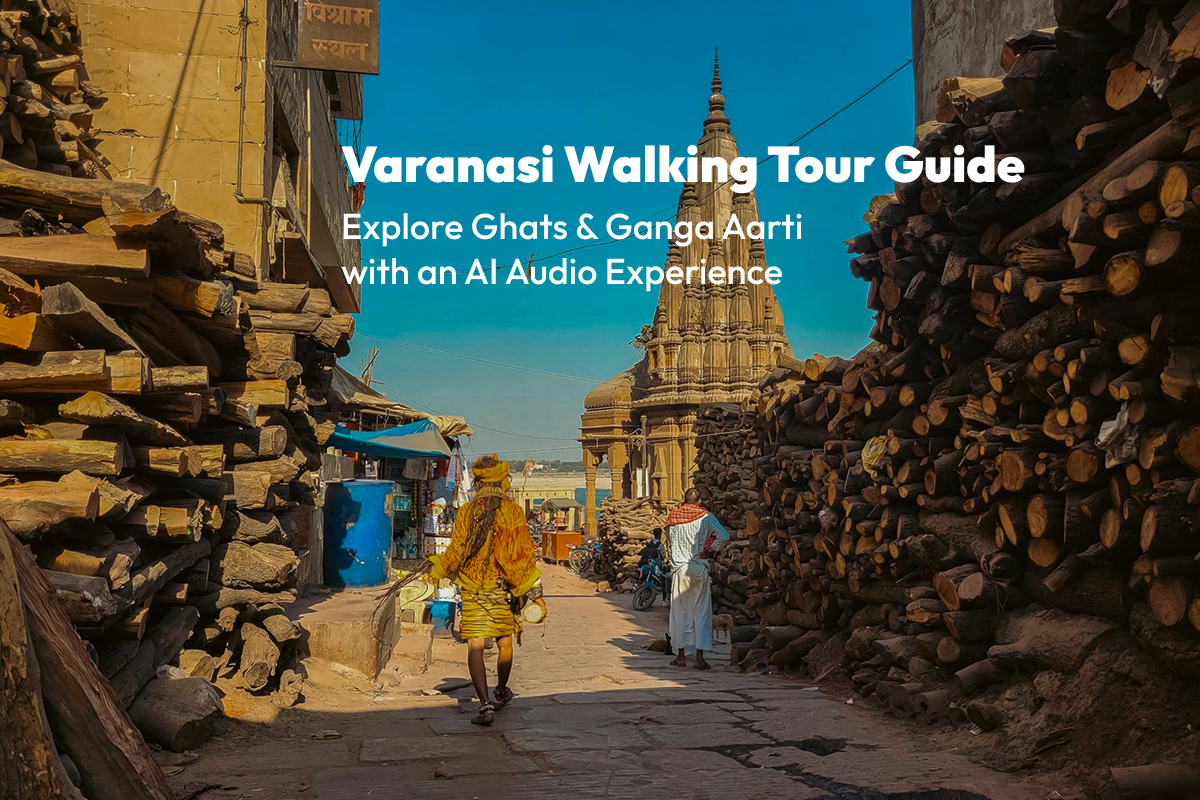
Varanasi does not greet you gently. It pulls you in through the smell of incense, the sound of temple bells, the sight of smoke rising from Manikarnika Ghat at first light. If you have ever stood on the banks of the Ganga and felt completely lost and completely found at the same time, you already understand this city.
But here is the truth most travel blogs skip: Varanasi is genuinely difficult to navigate without the right guide. The lanes (called galis) all look the same. The ghats blend into each other. And most visitors miss 70% of what makes this city extraordinary simply because nobody told them where to look or what they were looking at.
This guide changes that — and so does the Gamana app, an AI audio guide app built for explorers who want depth, not just directions.
Why Varanasi Deserves More Than a Rushed Day Trip
Varanasi is one of the world's oldest continuously inhabited cities. Every stone here has a story. Every ghat has a ritual. Every alley holds a temple that predates most nations.
Most tourists spend a single morning here. They arrive, watch the Ganga Aarti, click a few photos, and leave. What they miss:
- The difference between each of the 88 ghats and why it matters
- The stories behind the burning pyres at Manikarnika
- The significance of the exact sequence in the Ganga Aarti ceremony
- Hidden temples tucked inside residential lanes that even locals rarely discuss
- The best times of day for different ghats — which change completely by the hour
A Varanasi walking tour done right takes at least two days. Done slowly, with curiosity? A lifetime would not be enough.
The Best Varanasi Ghat Tour: Where to Walk and What to Know
Start at Assi Ghat — The Calm Before the City
Most seasoned travellers begin their Varanasi ghat tour at Assi Ghat, located at the southernmost end of the main ghat stretch. This is where the Assi river meets the Ganga.
Morning here is meditative. Priests perform small rituals. Locals do yoga by the water. Students from Banaras Hindu University come here to sit and think.
What to notice: The large Shiva lingam under the peepal tree. It is one of the most revered spots at Assi Ghat and easy to miss if you are rushing.
Walk North Through the Heart of the Ghats
From Assi, walk northward along the riverbank. This stretch — roughly 4 to 5 kilometres — covers the most historically and spiritually significant ghats in the city.
Key stops on any honest Varanasi ghat tour:
- Tulsi Ghat — Named after the poet-saint Tulsidas who wrote the Ramcharitmanas here. The ghat hosts the famous Nagnathaiya festival each year.
- Harishchandra Ghat — One of only two burning ghats in Varanasi. Smaller and less visited than Manikarnika, but equally powerful. This is where ancient mythology says King Harishchandra worked as a cremation attendant.
- Dashashwamedh Ghat — The most famous ghat. Busy, vibrant, chaotic in the best way. This is where the Ganga Aarti Varanasi ceremony takes place every single evening without exception.
- Manikarnika Ghat — The great cremation ghat. Hindus believe dying here grants moksha — liberation from the cycle of rebirth. It burns 24 hours a day, every day of the year. Approach with respect and silence.
- Scindia Ghat — Famous for the half-submerged Shiva temple that slowly sank into the river over centuries. One of the most photographed spots in Varanasi.
- Panchganga Ghat — Where five rivers are believed to converge, four of them invisible. The Alamgir Mosque sits above it — a layered symbol of Varanasi's complicated, rich history.

Ganga Aarti Varanasi: What Actually Happens and Why It Moves People
The Ganga Aarti at Dashashwamedh Ghat happens every evening at sunset. It has happened every single evening for decades, rain or shine, festival or ordinary Tuesday.
What the ceremony involves:
Seven priests stand on raised platforms, each holding a massive multi-tiered brass lamp. The lamps are lit. The ceremony begins with the blowing of conch shells. Then comes fire, incense, flowers, rhythmic chanting, and synchronized movement that lasts approximately 45 minutes.
The ceremony is a thanksgiving to the Ganga, to fire, to the divine. It is not a performance for tourists. It is a living ritual that predates any of us watching it.
Practical tips for Ganga Aarti Varanasi:
- Arrive at least 45 minutes early. The ghat fills quickly.
- Watching from a boat gives you an unobstructed view — book one in advance.
- The ceremony starts roughly at sunset, which shifts by season. Check the time on the day you plan to go.
- There is no entry fee. The space is open to everyone.
- Photography is allowed but be mindful — this is a place of worship first.
A good Varanasi tour guide — or a well-built AI travel guide app — will tell you not just what is happening but why. That context is what turns a spectacle into a memory.
Navigating the Galis: The Hidden Layer of Varanasi
Between the ghats and the main roads lies a dense maze of narrow lanes. This is where Varanasi becomes truly itself.
Inside these galis, you will find:
- Kashi Vishwanath Temple — one of the twelve Jyotirlingas, among the holiest Shiva temples in the world
- Annapurna Temple, dedicated to the goddess of food and nourishment
- Centuries-old sweet shops still using the same recipes
- Weavers producing Banarasi silk on handlooms in tiny workshops
- Classical music practitioners — Varanasi is one of India's great music cities
Walking without context here is easy. Walking with context changes everything. This is exactly where a Varanasi local guide — human or AI-powered — makes an enormous difference.

How Gamana's AI Audio Guide App Transforms Your Varanasi Walking Tour
Most people visiting Varanasi face the same problem: hiring a Varanasi local guide is inconsistent — quality varies wildly, and good ones book up fast. Audio tours that exist are often outdated, surface-level, or simply dull.
Gamana is built differently.
What Gamana does for your Varanasi tour:
Walk at your own pace, stop whenever you want, and let the AI audio guide deliver context precisely when and where you need it. No rushing to keep up with a group. No waiting for others. No missing something because the guide moved on.
- Location-aware storytelling triggered as you reach each ghat or landmark
- Historical, mythological, and cultural depth at every stop
- Works offline — critical in old Varanasi where connectivity is unreliable
- Available in multiple languages
- Built by people who understand that travel is about understanding, not just seeing
Whether you are on your first Varanasi walking tour or your fifth, Gamana surfaces details that even experienced travellers miss. The AI travel guide app fills the gap between a rushed group tour and having a deeply knowledgeable friend walk beside you.
How to Plan Your Varanasi Walking Tour: Practical Basics
- Best time to visit Varanasi: October to March. Winters are cool and manageable.
- Best time for ghat walks: Pre-dawn for stillness and ritual bathing. Late afternoon for light. Evening for the Ganga Aarti.
- Getting around: Walk the ghats. Take cycle rickshaws through the galis. Avoid cars in the old city — the lanes do not permit them.
- What to wear: Conservative clothing. Removing shoes is required at temple entrances.
- How long to budget: A minimum of two full days. Three is better.
Final Word
Varanasi is not a city you see. It is a city you absorb, slowly, on foot, with your senses fully open.
The ghats, the aarti, the galis, the temples — they all ask something of you. Presence. Attention. A willingness to not fully understand but to deeply feel.
Come with good shoes, an open mind, and the Gamana app in your pocket. Walk slowly. Ask questions. Let Varanasi do the rest.
Ready to explore Varanasi with expert audio guidance at every step?
Download the Gamana app and begin your journey before you even land.