May 21, 2026 • 6 min read
Marrakech Walking Tour: Explore Medina, Souks & Hidden Gems with an Audio Guide App
Gamana Editorial Team
Travel Innovation
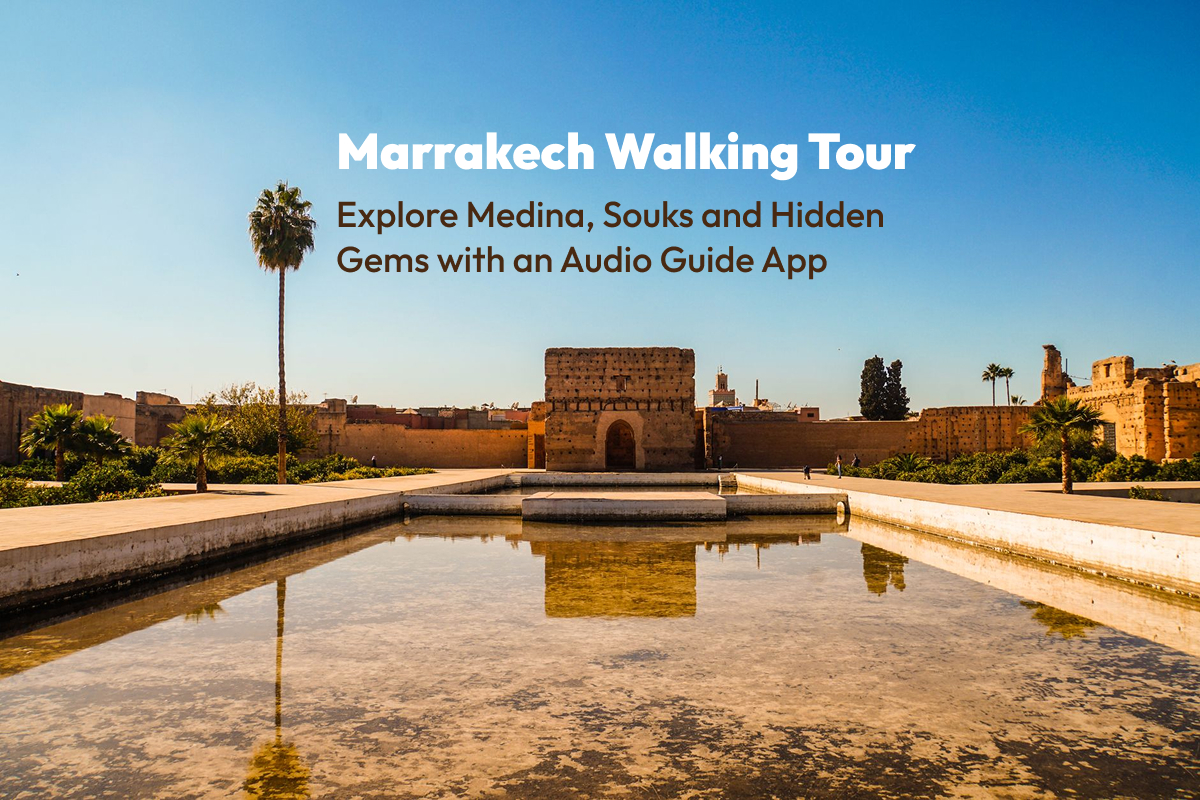
There is a moment every traveller knows in Marrakech. You step off Jemaa el-Fna square, turn down a narrow alley, and suddenly the city swallows you whole. The sounds, the smells, the colours, the chaos. It is electric. It is overwhelming. And without the right guidance, it is very easy to miss what actually makes this city so extraordinary.
That is exactly why a self-guided Marrakech walking tour with a smart audio guide app changes everything.
Why Walk Marrakech Instead of Joining a Group Tour?
Group tours move at someone else's pace. You are rushed past the spots that deserve ten minutes and stuck waiting at places you have already seen enough of. Walking on your own terms, with an audio guide in your ear, gives you the freedom to actually feel the city.
Here is what makes self-guided walking the smarter choice in Marrakech:
- Your own pace. Linger in a courtyard, sip mint tea without someone rushing you along.
- Deeper stories. Audio guides go beyond the surface and share the history, folklore, and local context that plaques never capture.
- Less crowded experiences. You can start early or late, avoiding the tourist rush entirely.
- Real savings. A quality app costs a fraction of a private guided tour.
What to Expect on a Marrakech Medina Walking Tour
The Medina is a UNESCO World Heritage Site and the beating heart of the city. It looks like a maze because, well, it largely is. But once you understand its logic, it becomes one of the most rewarding urban spaces you will ever explore on foot.
A well-structured Marrakech Medina walking tour will typically take you through:
Jemaa el-Fna Square
The social and geographic centre of Marrakech. Mornings are calm, with orange juice sellers and a handful of locals. By evening it transforms into an open-air theatre of storytellers, musicians, snake charmers, and food stalls. An audio guide brings you the history of this 1,000-year-old gathering place in a way a quick search never will.
The Koutoubia Mosque
The tallest structure in Marrakech and a navigational landmark you will use constantly. Non-Muslims cannot enter, but the gardens and exterior tell their own rich story. Listen to why its minaret became the architectural blueprint for the Giralda in Seville and the Hassan Tower in Rabat.
Mellah (Jewish Quarter)
Often skipped by first-time visitors, this is one of Marrakech's most layered neighbourhoods. The story of its Jewish community, its coexistence with Muslim neighbours, and its gradual transformation is something most travellers leave the city without ever hearing.
The Bahia Palace
A 19th-century masterpiece built not by a king but by a grand vizier who wanted to outshine royalty. The tilework, painted ceilings, and garden courtyards deserve proper context to fully appreciate.
Ben Youssef Madrasa
Once the largest Islamic school in North Africa. The geometric tile patterns and carved plasterwork are among the finest examples of Moroccan craftsmanship anywhere. Take your time here.
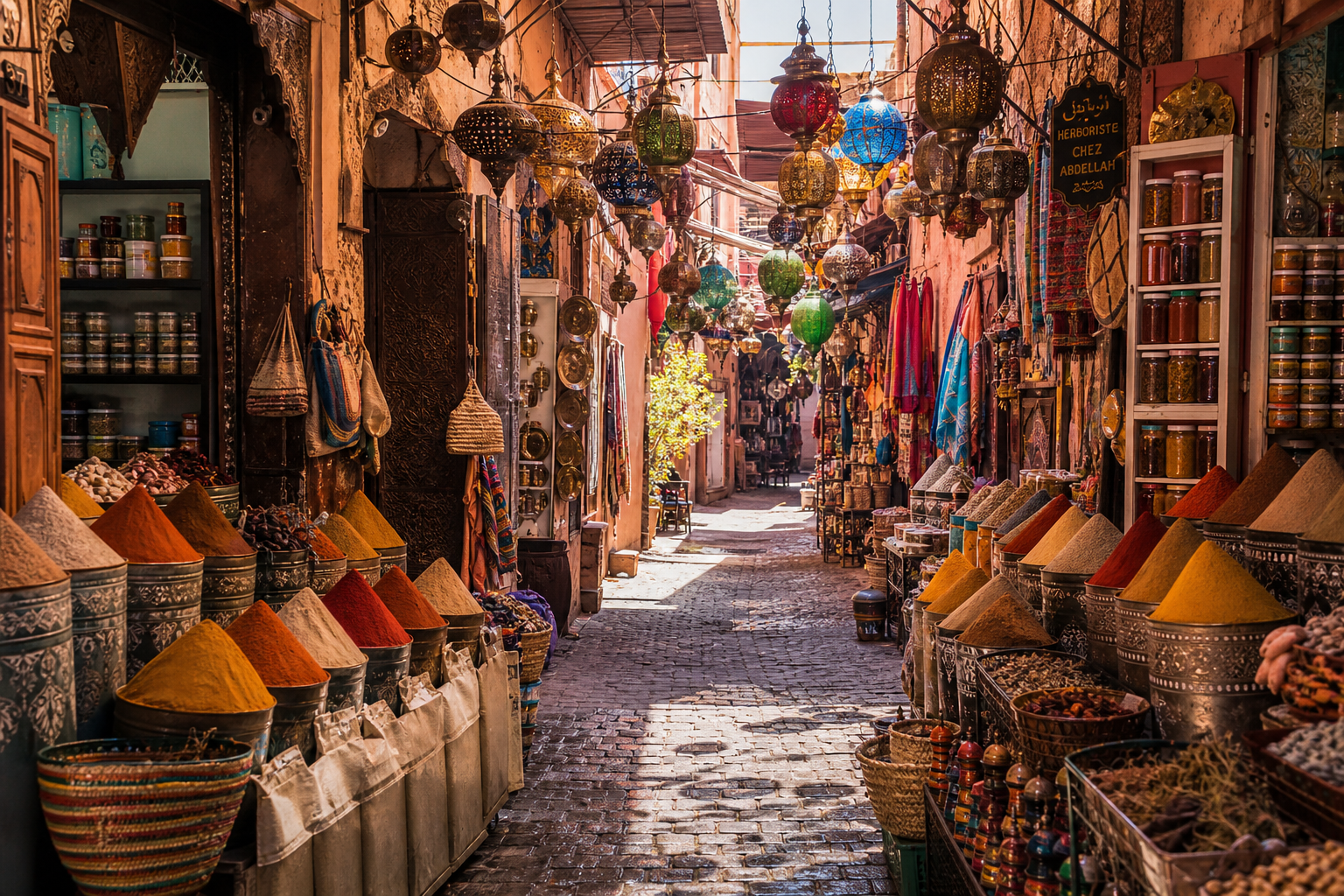
Navigating the Marrakech Souks: A Guide to Not Getting Lost (and What to Find)
The souks are organised by trade, which is a centuries-old system that still holds today. Knowing the layout ahead of time makes you a smarter, more confident shopper and explorer.
Here is a rough breakdown of the main souk areas and what you will find:
Souk Semmarine
The main entrance souk, filled with textiles, clothing, and tourist goods. Busy, colourful, and a good orientation point.
Souk el-Attarine
The spice and perfume souk. The scent alone is worth a visit. Look for argan oil, ras el hanout blends, and dried rose petals.
Souk Cherratine
The leather workers' quarter, where artisans craft belts, bags, and babouche slippers by hand.
Souk Haddadine
The metalworkers' souk. The sound of hammering copper and brass fills the air. Lanterns, trays, and teapots are made here in real time.
Souk des Teinturiers (Dyers' Souk)
Skeins of freshly dyed wool hang from wooden frames above the alley. One of the most photographed spots in the Medina for good reason.
A Marrakech souks guide built into your audio app will help you navigate between these areas without relying on maps that quickly become useless once you are deep inside.
Quick tips for souk shopping
- Bargaining is expected and part of the culture. Start at roughly 40 to 50% of the first asking price.
- Do not feel pressured. Walking away is always an option and often brings the price down.
- Avoid buying from the first stall you see. The souks are deep and the further in you go, the more authentic and fairly priced things often become.
Hidden Gems Most Tourists Walk Right Past
This is where a local audio guide earns its value. The visible Marrakech is stunning. The hidden Marrakech is unforgettable.
Mouassine Fountain
One of several neighbourhood fountains built during the Saadian dynasty. Often overlooked, it sits at the intersection of the Mouassine quarter and the main souk route. A quiet moment in a loud city.
Dar Bellarj (The Stork House)
A beautifully restored 1930s fondouk that once served as a stork hospital. Now a cultural foundation, it hosts art exhibitions and events with an intimate courtyard that feels worlds away from the souk noise outside.
Cyber Park Arsat Moulay Abdeslam
Locals come here to sit under ancient olive trees, kids play, families picnic. It is one of the most relaxed corners of Marrakech and barely features in any tourist itinerary.
The Chrob ou Chouf Fountain
The name translates to "drink and admire." Built in the 16th century, this public fountain features carved cedar wood detail that rivals anything inside the paid attractions. And it is completely free.
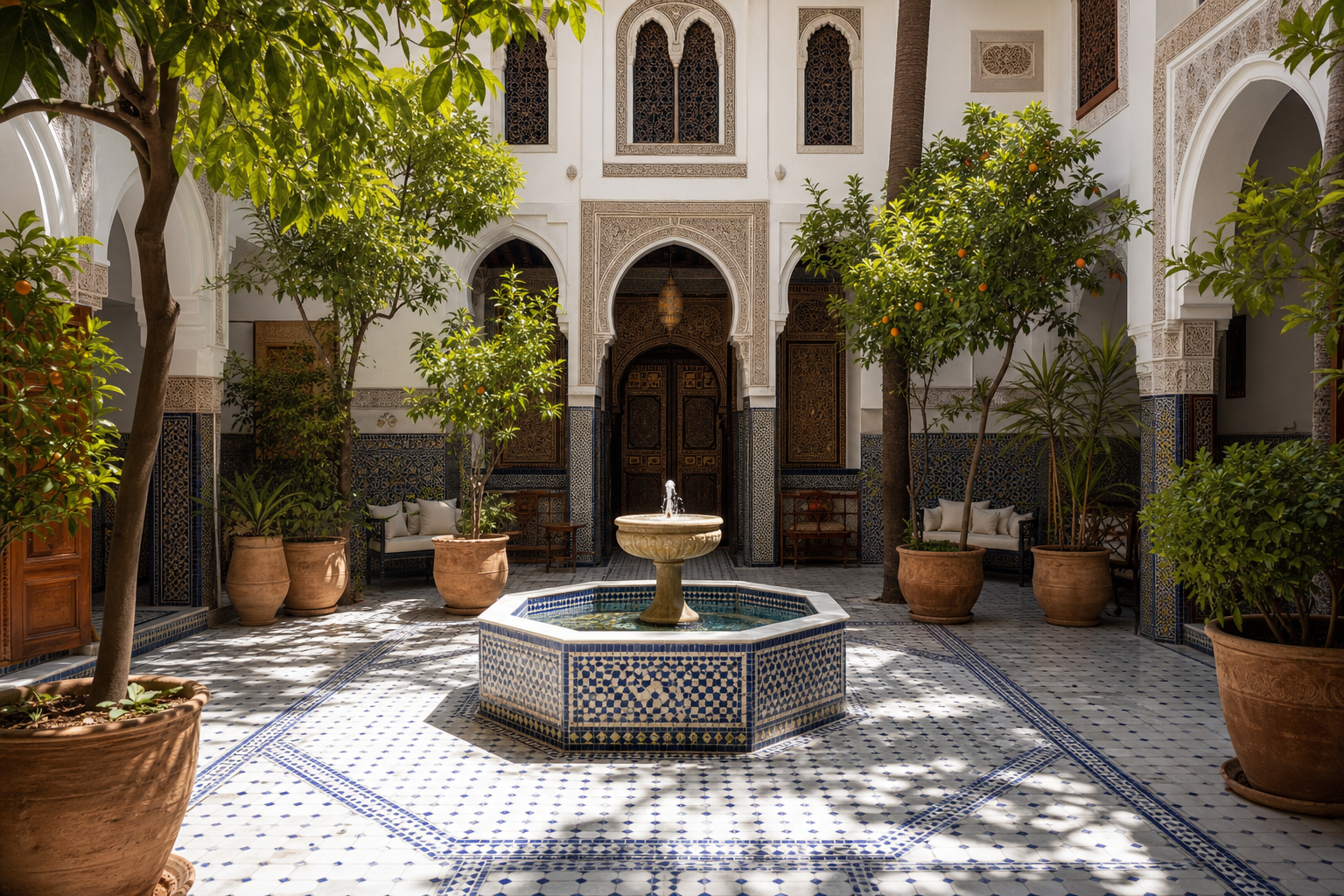
Using an Audio Guide App for Your Marrakech Local Tour
The Gamana app is built specifically for travellers who want to explore at their own pace without sacrificing depth or local knowledge.
What makes it well-suited for a Marrakesh walking tour and broader things to do in Marrakech exploration:
- Offline access. Download your tour before you arrive. Mobile data in the Medina can be unreliable.
- Location-aware narration. The app knows where you are and triggers the right content at the right moment without you having to tap or search.
- Local voices and stories. The content is built with authentic local insight, not generic travel copy.
- Flexible routes. Do the full Medina circuit or dip in for a focused 90-minute souk walk. The choice is yours.
It works particularly well for solo travellers and couples who want the knowledge of a private guide at a fraction of the cost.
Practical Things to Know Before You Go
- Best time to walk: Early morning (7 to 9am) or late afternoon (4 to 6pm). Midday in summer can hit 38°C and the souks get very crowded.
- What to wear: Lightweight, modest clothing. Covered shoulders and knees are respectful and expected, especially near mosques and in the Medina.
- What to carry: A small daypack, water, cash in small denominations (coins for hammams, fountains, and tips), and your charged phone with the app downloaded.
- Getting around: Most of the Medina is pedestrian-only. Petits taxis work well for reaching the Medina from the Ville Nouvelle.
- Safety: Marrakech is generally very safe for tourists. Stay alert in crowded souk areas, keep your phone in a front pocket, and trust your instincts in unfamiliar alleys.
Final Thought
Marrakech rewards curiosity. The travellers who leave feeling like they truly experienced the city are usually the ones who slowed down, asked questions, and let themselves get a little lost. A well-crafted audio guide will not hold your hand through the experience but it will make sure you understand what you are seeing, hearing, and feeling.
Download the Gamana app before your trip, set off on foot, and let Marrakech do the rest.
Ready to explore Marrakech with expert audio guidance at every step?
Download the Gamana app and begin your Marrakech walking tour through the Medina, souks, and hidden gems before you arrive.